

Tattoo Guide

Does Getting a Tattoo Hurt? What Research Says

Yes, getting a tattoo hurts, but on average the pain is moderate. In a peer-reviewed survey of 1,092 tattooed adults, people rated their pain during tattooing at 4.35 out of 10 on average, falling to about 2 out of 10 right afterwards.

Here’s what that research found, why online tattoo pain charts are mostly guesswork, and how to make your session more comfortable, including what health authorities say about numbing creams.
Key Points

  • Average pain during tattooing was 4.35 out of 10, and 2.07 right after, in a 2020 study.
  • Body area (arms, legs, torso, neck) didn’t significantly change pain intensity in that study.
  • Longer sessions, bleeding and stress were linked to more pain.
  • Pain charts ranking body parts aren’t based on peer-reviewed research.
  • Numbing creams: ask a pharmacist or doctor first. The US FDA has warned about some high-strength products marketed for tattoos.

What the Research Found

The most detailed study we found surveyed 1,092 people (863 women and 229 men) who had been tattooed, recruited through tattoo studios and online in Poland, and published in the International Journal of Environmental Research and Public Health in 2020. Participants rated their pain on a scale from 0 to 10.

  • During tattooing: 4.35 out of 10 on average.
  • Right after: 2.07 out of 10 on average.
  • Men and women reported similar pain during tattooing. Women rated pain slightly higher right afterwards.
  • Body area grouped as upper limbs, lower limbs, torso and neck didn’t significantly predict how intense the pain was.
  • Radiating pain, pain that spreads beyond the spot being tattooed, was more common on the arms.

The study had limits: most respondents were women, some answered weeks after their tattoo, and tattoo size wasn’t recorded. Still, it’s one of the few real measurements of tattoo pain.

What Makes a Tattoo Hurt More?

In the same study, higher pain was linked to:

  • Longer sessions. Pain built up the longer people were tattooed.
  • Bleeding during the tattoo.
  • Stress before and during the session.

People who took painkillers beforehand also reported more pain. That doesn’t mean painkillers make tattoos hurt; it’s more likely that people who expected a lot of pain were the ones who took them. If you’re thinking about taking any medicine before your appointment, ask a pharmacist or doctor.

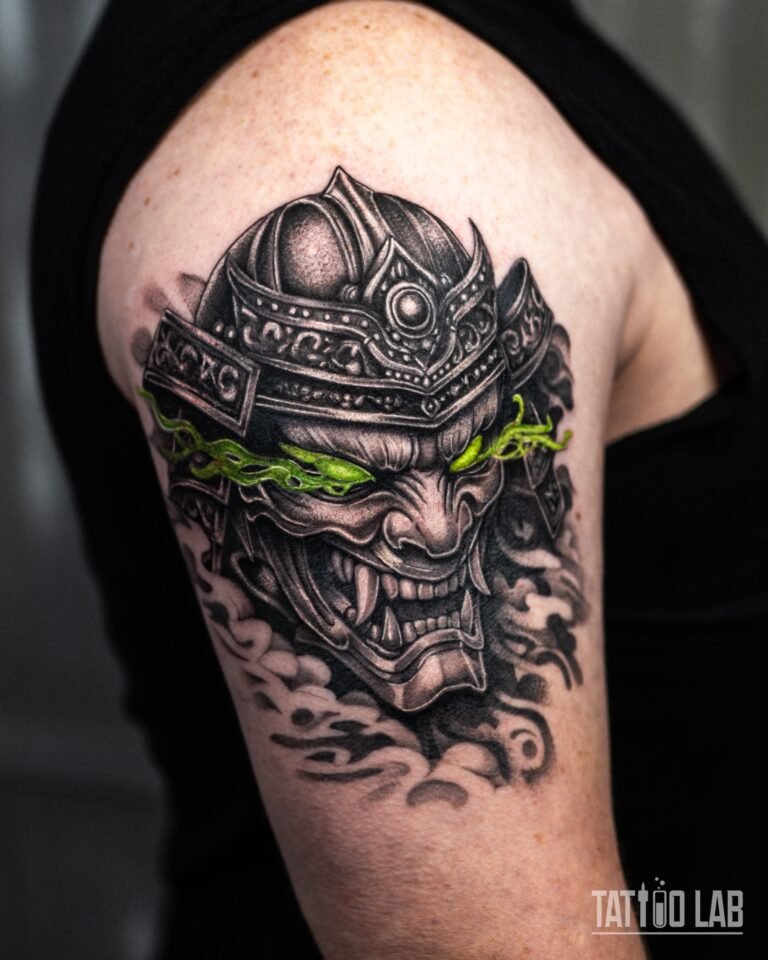
Black and grey realism tattoo of a samurai helmet and oni mask with glowing green eyes on the upper arm

Are Tattoo Pain Charts Accurate?

You’ve probably seen charts that colour the body from “least painful” to “most painful”, usually with ribs, feet and spine in red. We looked for peer-reviewed research behind them and didn’t find any study that ranks tattoo pain by specific body part. Those charts are based on opinion and experience, not measurements.

The study above found no significant difference between broad body areas. Pain varies from person to person and session to session, so the best guide is a conversation with your artist about the placement you have in mind.

How to Make Your Tattoo More Comfortable

  • Keep sessions manageable. Because longer sessions were linked to more pain, a large piece can be split into several shorter sessions. Ask your artist.
  • Lower your stress. Plan the design in advance, arrive on time, and bring headphones or someone to chat with if that helps you relax.
  • Eat and rest. Have a proper meal before your appointment and get a good night’s sleep.
  • Come sober. Skip alcohol before your tattoo.
  • Take breaks. Tell your artist if you need a pause. That’s completely normal.
  • Breathe steadily and try to stay still. Your artist will guide you.

Numbing Creams: What to Know First

Numbing creams can seem like an easy fix, but health authorities urge caution.

  • In 2024 the US Food and Drug Administration warned consumers not to use certain pain-relief products marketed for tattooing, piercing and other cosmetic procedures. Some contained more lidocaine than US over-the-counter rules allow, and the FDA says high-strength products absorbed through the skin can cause irregular heartbeat, seizures and breathing problems. The risk rises when products are used heavily, over large areas, on broken skin or under plastic wrap.
  • Health Canada’s labelling standard for nonprescription numbing products requires warnings such as not using large amounts over large areas or on raw skin, and it lists numbing skin before cosmetic procedures as outside its scope.

If you want to use a numbing product, talk to a pharmacist or doctor first, check that it has a Health Canada DIN or NPN number, and tell your artist before you apply anything.

What About Pain After the Tattoo?

A new tattoo usually feels tender and a little sore for the first few days, then itchy as it heals. Follow our tattoo aftercare guide.

Pain that gets worse instead of better, spreading redness, fever, pus or red streaks can be signs of infection. See a doctor if you notice them.

Tattoo Pain Questions

There’s no reliable research ranking body parts. In a study of 1,092 people, broad body areas didn’t significantly change pain intensity, while longer sessions, bleeding and stress did. Talk to your artist about the placement you want.

In a 2020 study, people rated pain during tattooing at 4.35 out of 10 on average, and 2.07 right afterwards. Your own experience may be higher or lower.

In that study, longer sessions were linked to more pain. Large pieces can often be split into shorter sessions.

We didn’t find any research comparing pain between tattoo styles. Smaller, quicker tattoos mean shorter sessions, which the research links with less pain.

Ask a pharmacist or doctor first. The US FDA has warned about some high-strength numbing products marketed for tattoos, and Health Canada’s labelling standard doesn’t cover numbing before cosmetic procedures. Always tell your artist before applying anything.

Ask a pharmacist or doctor about any medicine before your appointment, especially if you have a health condition or take other medicines.

Nervous About the Pain?

Tell us about your idea and any worries, and your artist will help you plan the size, placement and session length that suit you.

Sources

  1. Gender Differences in Subjective Pain Perception during and after Tattooing. Witkoś and Hartman-Petrycka, International Journal of Environmental Research and Public Health, 2020.
  2. FDA warns consumers to avoid certain topical pain relief products due to potential for dangerous health effects. US Food and Drug Administration, 2024.
  3. Topical Anaesthetic/Analgesic/Antipruritic Labelling Standard. Health Canada, 2015.
  4. Tattoo Aftercare Tips From a Dermatologist. Cleveland Clinic Health Essentials, 2026.

This guide is general information, not medical advice. Ask a doctor or pharmacist before using any medicine or numbing product.

Book Now!

Fill in the Contact form

Book Now!

Fill in the booking form

Get in Contact!