
Tattoo Guide

How to Choose a Safe Tattoo Studio in Halifax

The best tattoo studio for you is one whose work you love and that follows Nova Scotia’s safety rules. This checklist explains what the province requires from tattoo and piercing studios, what to look for in a portfolio, and the red flags to walk away from.

We’ve based it on Nova Scotia’s Safe Body Art Regulations and Standard, with links to every source.
The Quick Checklist

  • A Nova Scotia Body Art Facility Permit posted where you can see it
  • Artists with infection prevention training
  • Sterile, single-use needles opened in front of you
  • A consent form and written aftercare instructions
  • A portfolio of work in the style you want, including healed tattoos
  • Clear policies on deposits, rescheduling, age and ID
  • Honest advice, including being told when an idea won’t work

1. Check the Permit

In Nova Scotia, businesses that offer tattooing, piercing and other body art services need a Body Art Facility Permit under the Safe Body Art Act. The regulations require the operator to post the permit somewhere clients can see it before any service begins.

If you can’t see a permit, ask. A professional studio will happily show you. Tattoo Lab holds a Nova Scotia Body Art Facility Permit.

2. Ask About Training

Nova Scotia’s regulations require every operator and staff member at a body art facility to complete infection prevention training recognised by the province, and to follow the studio’s written infection prevention plan.

A Canadian review of infection risks in personal service settings found that inadequate training and poor infection-prevention practice were the main risk factors behind infections. At Tattoo Lab, all our artists hold bloodborne pathogens certification.

3. Look for Single-Use, Sterile Needles

Under Nova Scotia’s regulations, anything designed to break the skin must be bought disposable, single-use and pre-sterilised. You should see needles and cartridges come out of sealed packaging for your appointment, and the artist should wear fresh gloves.

Tattoo Lab uses sterile, single-use needles and cartridges, plus single-use products and supplies wherever applicable.

4. Ask About the Inks

In Canada, tattoo inks are regulated as cosmetics under the Food and Drugs Act, and Nova Scotia’s Safe Body Art Standard requires studios to use inks that meet those federal rules. Health Canada also issues recalls when a tattoo ink is found to be contaminated.

Ask which brands a studio uses. Tattoo Lab uses professional inks from well-known, established brands, including Dynamic, World Famous Ink and Kwadron.

5. Expect a Consent Form and Written Aftercare

Nova Scotia requires studios to have each client sign a client awareness form and to give aftercare instructions. Under the Standard, the written information includes aftercare for your procedure, approximate healing times, activity restrictions such as swimming, a note that some medicines or health conditions can affect healing, a note that removal may not be possible or may scar, and advice to seek medical care if problems develop.

If a studio skips the paperwork, that’s a warning sign. You can read our own tattoo aftercare guide before you book.

6. Check Your Skin and the Placement

The Standard doesn’t allow body art on skin that shows infection, sunburn, a rash, acne, moles or open wounds. Dermatologists at the American Academy of Dermatology also suggest keeping tattoos away from moles, so changes can still be spotted early.

A good artist will check the area and suggest moving or adjusting the design if needed.

7. Study the Portfolio

Safety comes first, but the art matters too. When you look at a portfolio:

  • find work in the style you want, such as fine line, realism or colour
  • look for healed photos, not just fresh ones
  • check that lines are clean and consistent, and shading is smooth
  • notice whether the artist designs custom pieces or mainly copies

Browse our tattoo portfolio and meet our artists.

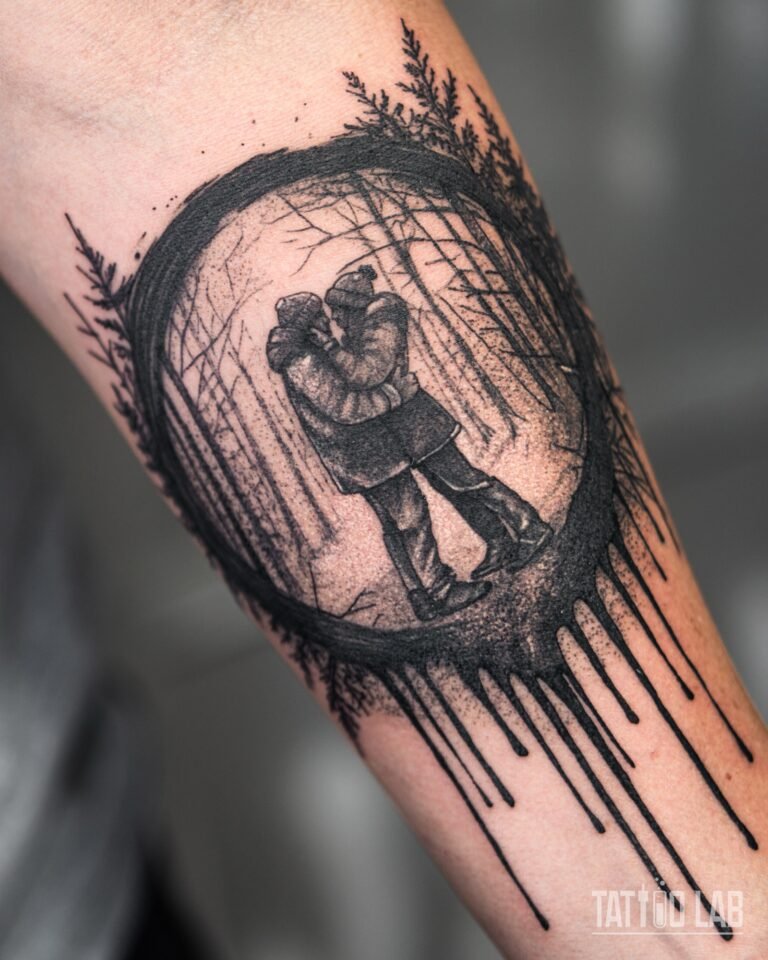
Black and grey tattoo of a couple embracing in a winter forest inside a brushstroke circle with ink drips on the forearm

8. Read the Policies and Reviews

A trustworthy studio is clear about deposits, rescheduling, age rules and ID before you pay anything. Read recent reviews too, especially comments about cleanliness, communication and how tattoos healed.

At Tattoo Lab, deposits vary by tattoo and appointment and go toward your final price, rescheduling needs at least 7 days’ notice, tattoos are 16+ with a parent or guardian present for clients aged 16–17, and all clients bring government-issued photo ID. See how booking works.

Red Flags to Walk Away From

  • No permit, or a studio that won’t show it
  • Needles or cartridges that aren’t opened from sealed, sterile packaging
  • No consent form and no written aftercare
  • Pressure to decide, pay or get tattooed on the spot
  • Being tattooed over broken, sunburned or irritated skin
  • Home or party setups without a permit
  • Requests to send a deposit to someone you can’t confirm works for the studio

The Government of Canada’s travel health advice makes the same point for anywhere in the world: only get tattoos and piercings in settings that follow public health rules.

Choosing a Piercing Studio

The same checks apply to piercing. Nova Scotia’s Standard requires jewellery for new piercings to meet the Association of Professional Piercers’ jewellery standards. Cleveland Clinic advice prefers needles over piercing guns, which aren’t always sterilised between uses.

One detail surprises many people: earlobe-only piercing with a pre-sterilised, single-use cartridge system is exempt from Nova Scotia’s body art regulations. Tattoo Lab uses titanium jewellery for piercings. See body piercing in Halifax.

Choosing a Studio: Questions

Yes. Nova Scotia’s Safe Body Art Act requires a Body Art Facility Permit to operate a body art business, and the permit must be posted where clients can see it before services are carried out.

Look for a posted permit, artists with infection prevention training, needles opened from sterile packaging, fresh gloves, a consent form and written aftercare instructions. Don’t be afraid to ask questions.

Work in the style you want, healed photos as well as fresh ones, clean and consistent lines, and smooth shading. Custom designs show an artist can plan a piece around your idea.

Yes. Tattoo Lab holds a Nova Scotia Body Art Facility Permit, all our artists hold bloodborne pathogens certification, and we use sterile, single-use needles and cartridges.

Body art facilities are regulated by the Province of Nova Scotia under the Safe Body Art Act, its regulations and the Nova Scotia Safe Body Art Standard. The province’s environmental health program handles permits.

Ready to Book With Confidence?

Send us your idea, ask any safety questions you have, and we’ll match you with the right artist.

Sources

  1. Safe Body Art Regulations, N.S. Reg. 39/2018. Province of Nova Scotia.
  2. Nova Scotia Safe Body Art Standard. Nova Scotia Department of Health and Wellness, 2018.
  3. Environmental health. Government of Nova Scotia.
  4. Infection prevention in personal services settings: Evidence, gaps and the way forward. Popalyar, Stafford, Ogunremi and Dunn, Canada Communicable Disease Report, 2019.
  5. Notification of cosmetics: examples. Health Canada.
  6. Bloodline brand tattoo pigments recalled due to potential microbial contamination. Health Canada, 2024.
  7. Do tattoos cause skin cancer? American Academy of Dermatology, 2025.
  8. Travel advice and advisories: health. Government of Canada.
  9. New Ear Piercing: Healing and Aftercare. Cleveland Clinic Health Essentials, 2025.
  10. Jewelry for initial piercings. Association of Professional Piercers (industry association).

This guide is general information, not legal or medical advice. Rules can change, so check the Province of Nova Scotia’s website for the current regulations.

Book Now!

Fill in the Contact form

Book Now!

Fill in the booking form

Get in Contact!