

Tattoo Guide

Is Tattoo Ink Safe? What Canadian Rules and Research Say

Tattoo inks are regulated, and professional studios follow strict hygiene rules, but no tattoo is completely risk-free. Skin reactions, allergies (especially to red ink) and infections do happen, and researchers are still studying long-term questions such as a possible link with some cancers.

This guide explains how tattoo inks are regulated in Canada and the EU, the side effects dermatologists see, what MRI scans mean for tattoos, and what the cancer research does and doesn’t show, with links to every source.
Key Points

  • In Canada, tattoo inks are regulated as cosmetics under the Food and Drugs Act and Cosmetic Regulations.
  • In the EU, a REACH restriction on hazardous substances in tattoo inks has applied since January 2022.
  • Red ink is a common cause of allergic reactions, which can start months or years later.
  • MRI: tattoo-related burning or swelling during scans is reported but rare. Tell your radiology team about your tattoos.
  • Cancer research is mixed: some studies found associations, others didn’t, and none shows that tattoos cause cancer.

How Tattoo Ink Is Regulated in Canada

Health Canada lists tattoo inks as cosmetics. That means they fall under the federal Food and Drugs Act and Cosmetic Regulations, which cover safety, sanitary manufacturing, ingredient disclosure and notifying Health Canada. Selling cosmetics made with hazardous substances or under unsanitary conditions isn’t allowed.

When problems are found, Health Canada issues recalls. In 2024, for example, certain lots of a brand of tattoo pigments were recalled in Canada because of possible microbial contamination.

In Nova Scotia, the Safe Body Art Standard requires studios to use inks that meet these federal rules and to handle ink without contaminating it. At Tattoo Lab, we use professional inks from well-known, established brands, including Dynamic, World Famous Ink and Kwadron.

How the EU Regulates Tattoo Ink

Visiting from Europe? Since 4 January 2022, an EU restriction under the REACH chemicals regulation (Regulation (EU) 2020/2081) has limited hazardous substances in inks used for tattoos and permanent makeup. It covers substances classified as carcinogenic, mutagenic or toxic to reproduction, skin sensitisers and irritants, substances banned in cosmetics, and a list of specific chemicals, and it sets labelling rules such as batch numbers and ingredient lists.

Germany’s Federal Institute for Risk Assessment (BfR) says about 4,200 substances are banned or severely restricted in tattoo inks under these rules.

Allergies and Skin Reactions

The American Academy of Dermatology (AAD) describes several reactions to watch for:

  • Allergic reactions can start straight away or weeks, years or even decades later. Red ink is a common culprit. Signs include redness, swelling, itching, bumps and blisters.
  • Sun reactions: tattooed skin can swell, redden or itch within minutes to hours of sun exposure.
  • Flares of existing skin conditions such as psoriasis or eczema.
  • Keloids, raised scars, in people who are prone to them.

A study of 308 complications seen at a specialist tattoo clinic in the Netherlands found that allergic reactions to red tattoos made up about half of the cases. That’s a share of complications at one clinic, not the risk for any one tattoo, but it shows why red ink is worth discussing with your artist if you have sensitive skin or allergies.

In a large Swedish survey, 40% of tattooed people reported at least one side effect in the first month, mostly minor and self-reported, and few needed medical care for later side effects. Larger tattooed areas and coloured inks were linked to more reported side effects.

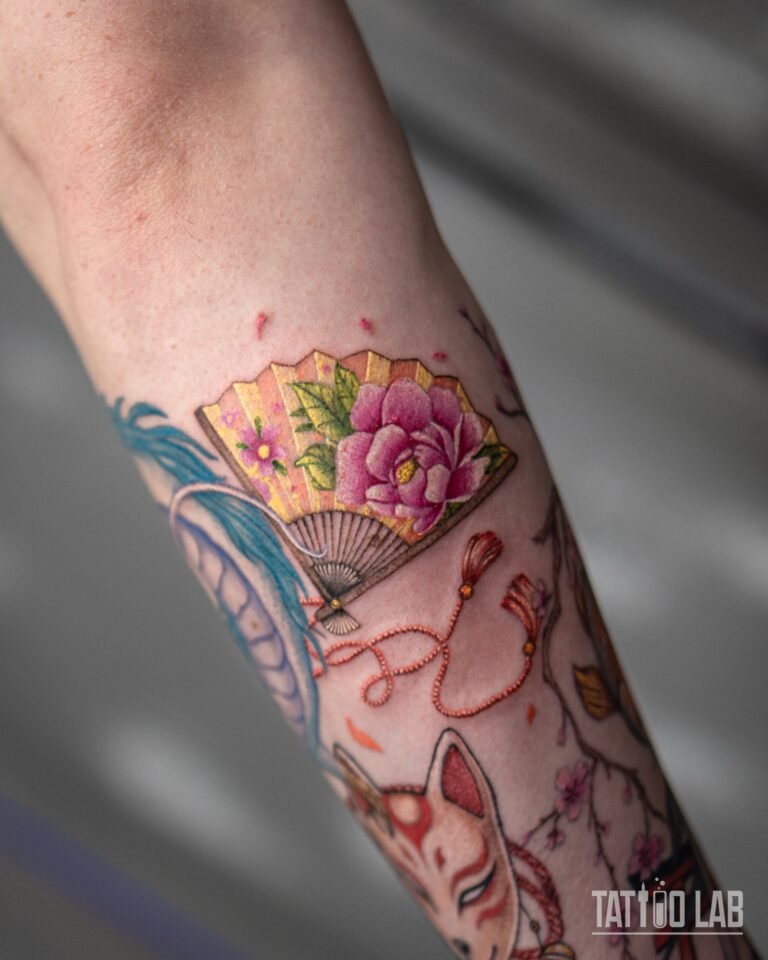
Colour tattoo of a Japanese folding fan with a pink peony and tassels on a forearm sleeve

Infections: Why Sterile Technique Matters

The US Food and Drug Administration (FDA) notes that infections can come from unsterile equipment and needles, and also from contaminated ink, even when the artist’s hygiene is good and the ink bottle was sealed. A 2012 CDC report linked a cluster of skin infections to ink that was diluted with non-sterile water.

That’s why Nova Scotia requires studios to use single-use, pre-sterilised needles and to follow an infection prevention plan. Tattoo Lab uses sterile, single-use needles and cartridges.

See a doctor if a tattoo shows spreading redness, worsening pain, pus, fever or red streaks, or a persistent rash or bumps within the tattoo.

Tattoos and MRI Scans

The FDA and the AAD both describe tattoo-related swelling or burning during MRI scans as rare, and the FDA says reported cases appear to have been short-lived. Research published in the New England Journal of Medicine in 2019 concluded the risk was very small under the conditions it tested.

Don’t avoid a scan you need because of a tattoo. Tell your radiology team about your tattoos, especially large or dark ones and permanent makeup, and let them know straight away if you feel heat or discomfort during the scan.

What Does Research Say About Tattoos and Cancer?

This is an area of active research, and headlines often go further than the studies do.

  • Lymphoma (Sweden, 2024): a Lund University study estimated a 21% higher rate of lymphoma among tattooed people, but the overall result was not statistically significant. The researchers said results need confirming, that lymphoma is rare, and that findings apply at group level, not to individuals.
  • Skin cancer and lymphoma (Denmark, 2025): a study of twins found associations, especially for large tattoos, but with small numbers and wide uncertainty.
  • Melanoma (Sweden, 2025): a study reported an association, which other researchers have publicly disputed.
  • Skin cancer (France, 2026): a study of more than 111,000 adults found no association between tattoos and any type of skin cancer.

The bottom line: some studies have found associations and others haven’t, and none proves that tattoos cause cancer. The AAD says more research is needed and gives practical advice: keep tattoos away from moles, check your skin regularly, including inked areas, and see a dermatologist about any spot that changes, itches or bleeds.

Pregnancy and Breastfeeding

Germany’s Federal Institute for Risk Assessment advises against getting tattooed during pregnancy or while breastfeeding. If you’re pregnant, planning a pregnancy or breastfeeding, talk to your doctor before booking a tattoo.

How to Lower Your Risk

  • Choose a studio with a Nova Scotia Body Art Facility Permit, trained artists and sterile, single-use needles. See our safe studio checklist.
  • Tell your artist about allergies, sensitive skin, keloids or skin conditions before you book.
  • Keep the tattoo away from moles.
  • Follow your aftercare instructions closely.
  • Protect healed tattoos from the sun.
  • See a doctor or dermatologist about any reaction or change in tattooed skin.

Tattoo Ink Safety Questions

Health Canada lists tattoo inks as cosmetics, so they fall under the Food and Drugs Act and Cosmetic Regulations, including safety, sanitary manufacturing and notification requirements. In Nova Scotia, studios must use inks that meet these federal rules.

Red ink is a common cause of allergic reactions, which can appear long after the tattoo. If you have sensitive skin or allergies, talk to your artist about colour choices before you book.

Yes. Tattoo-related burning or swelling during MRI is reported but rare. Tell your radiology team about your tattoos before the scan and speak up if you feel heat or discomfort.

There’s no proof that they do. Some studies have found associations with lymphoma or skin cancer, while a large French study found no link with skin cancer. Researchers say more work is needed. Keep tattoos away from moles and check your skin regularly.

The FDA says even unopened, sealed inks can carry microbes. That’s one reason professional studios buy from established brands and watch for recalls.

Germany’s Federal Institute for Risk Assessment advises against tattooing during pregnancy or breastfeeding. Talk to your doctor before booking.

Questions About Inks or Allergies?

Text us before you book. We’ll talk you through the inks we use and help you plan a design that suits your skin.

Sources

  1. Notification of cosmetics: examples of cosmetics and products not considered to be cosmetics. Health Canada, 2024.
  2. Bloodline brand tattoo pigments recalled due to potential microbial contamination. Health Canada, 2024.
  3. Nova Scotia Safe Body Art Standard. Nova Scotia Department of Health and Wellness, 2018.
  4. Commission Regulation (EU) 2020/2081 on substances in tattoo inks or permanent make-up. European Commission, 2020.
  5. Questions and answers about tattoo inks. German Federal Institute for Risk Assessment, 2025.
  6. Tattoos: 7 unexpected skin reactions and what to do about them. American Academy of Dermatology.
  7. Do tattoos cause skin cancer? American Academy of Dermatology, 2025.
  8. Keloid scars: causes. American Academy of Dermatology, 2022.
  9. Tattoos and permanent makeup: fact sheet. US Food and Drug Administration, 2024.
  10. Think before you ink: tattoo safety. US Food and Drug Administration, 2024.
  11. Tattoo-associated nontuberculous mycobacterial skin infections, multiple states, 2011–2012. CDC Morbidity and Mortality Weekly Report, 2012.
  12. Complications of tattoos and permanent makeup: overview and analysis of 308 cases. van der Bent et al., Journal of Cosmetic Dermatology, 2021.
  13. Self-reported side effects of tattooing: the Swedish TABOO cohort. Rietz Liljedahl et al., BMJ Public Health, 2026.
  14. Safety of tattoos in persons undergoing MRI. Callaghan et al., New England Journal of Medicine, 2019.
  15. Tattoos as a risk factor for malignant lymphoma: a population-based case-control study. Nielsen, Jerkeman and Saxne Jöud, eClinicalMedicine, 2024.
  16. Possible association between tattoos and lymphoma revealed. Lund University, 2024.
  17. Tattoo ink exposure is associated with lymphoma and skin cancers: a Danish study of twins. Clemmensen et al., BMC Public Health, 2025.
  18. Does tattoo exposure increase the risk of cutaneous melanoma? Rietz Liljedahl et al., European Journal of Epidemiology, 2025.
  19. No robust evidence supporting an association between tattoos and de-novo cutaneous melanoma. Kluger, European Journal of Epidemiology, 2026.
  20. Tattoos and risk of cutaneous melanoma and nonmelanoma skin cancer in France. Mo et al., Journal of the National Cancer Institute, 2026.

This guide summarises public health guidance and published research. It is general information, not medical advice. See a doctor or dermatologist about any reaction, skin change or health question.

Book a Tattoo

Tell us about your tattoo idea

Book a Piercing

Tell us which piercing you’d like

Planning a Tattoo?