

Tattoo Research

Tattoo Statistics: How Many Canadians Have Tattoos?

About one in three Canadians has a tattoo, according to a 2024 national survey by Halifax-based Narrative Research. That’s up from about one in five in a 2011 Ipsos poll, although the two surveys used different methods.

Below, we’ve gathered the most reliable survey data we could find on tattoos in Canada, the United States and Germany: who has them, how many, whether people regret them, and how attitudes are changing. Every figure links to its source.
Key Numbers

  • 33% of Canadians have a tattoo (Narrative Research, 2024).
  • 51% of Canadian millennials have a tattoo, the highest of any generation in that survey.
  • 38% of Canadian women and 28% of Canadian men have a tattoo.
  • About three-quarters of tattooed Canadians are happy with their tattoos.
  • 32% of US adults have a tattoo (Pew Research Center, 2023).
  • About 1 in 5 people in Germany aged 14 and over had a tattoo in 2016.

Tattoos in Canada Today

Narrative Research, working with the Logit Group, surveyed 1,230 Canadian adults online in March 2024. The survey found:

  • 33% of Canadians have at least one tattoo.
  • Women (38%) are more likely than men (28%) to have a tattoo.
  • Among tattooed Canadians, 31% have one tattoo and 28% have five or more.
  • People in the Prairies are the most likely to have tattoos, while people in Ontario and Atlantic Canada are more likely to have tattoos that a long-sleeved top and pants would cover.
  • About three-quarters of tattooed Canadians say they’re happy with their tattoos, and very few want them removed.

Because it was an online panel, the survey doesn’t report a margin of error.

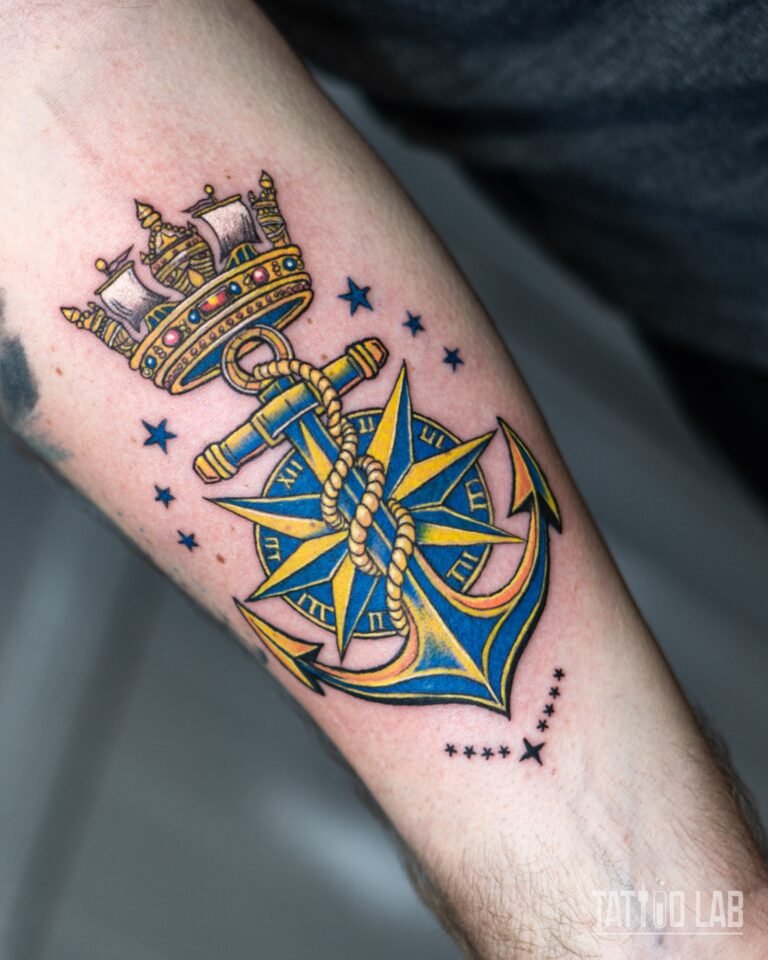
Neo-traditional colour tattoo of a rope-wrapped anchor over a compass star with a naval crown, forearm

Tattoos by Generation in Canada

In the same 2024 survey, the share of Canadians with a tattoo was:

  • Millennials: 51%
  • Gen X: 43%
  • Gen Z: 35%
  • Baby boomers: 17%

Many Gen Z adults are still young, so their share may grow as they get older.

How Tattoo Rates Have Changed

In December 2011, an Ipsos poll for Global Television of 1,021 Canadians found:

  • 22% of Canadians had at least one tattoo, and 11% had more than one.
  • Women (24%) were slightly more likely than men (20%) to have one.
  • 36% of adults aged 18–34 had a tattoo, compared with 24% of those aged 35–54 and 8% of those 55 and older.
  • By region: British Columbia 28%, Quebec 25%, Alberta 23%, Atlantic Canada 21%, Saskatchewan and Manitoba 20%, and Ontario 19%.
  • 10% of tattooed Canadians regretted a tattoo.

Comparing 22% in 2011 with 33% in 2024 suggests tattoos have become more common in Canada, but the surveys used different methods, so treat the change as a trend rather than an exact increase.

Tattoos in the United States

Pew Research Center surveyed 8,480 US adults in July 2023:

  • 32% of US adults have a tattoo, and 22% have more than one.
  • Women (38%) are more likely than men (27%) to have one.
  • By age: 41% of adults under 30, 46% of those aged 30–49, 25% of those aged 50–64 and 13% of those 65 and older.
  • 69% of tattooed adults say honouring or remembering someone or something was a reason for at least one tattoo.
  • 24% of tattooed adults have ever regretted getting a tattoo.
  • About 8 in 10 US adults say society has become more accepting of people with tattoos over the past 20 years.

Tattoos in Germany

A study in the German public health journal Bundesgesundheitsblatt analysed three nationally representative surveys (2003, 2009 and 2016). By 2016, about one in five people in Germany aged 14 and over had at least one tattoo, and tattoos were most common among adults aged 25–34. People with tattoos came from every education level.

Other German surveys have used different methods and found different figures, so it’s best to quote one survey at a time.

Tattoo Regret: What the Numbers Show

  • Canada, 2024: about three-quarters of tattooed Canadians are happy with their tattoos, and very few want them removed (Narrative Research).
  • Canada, 2011: 10% of tattooed Canadians regretted a tattoo, including 15% of those aged 18–34 (Ipsos).
  • United States, 2023: 24% of tattooed adults had ever regretted a tattoo (Pew Research Center).

A 2023 survey of 3,033 US adults, published in the open-access journal Cureus, found regret was more likely for tattoos on the face, neck, hands, wrists or fingers, tattoos done because of peer pressure or while impaired, and tattoos that caused a side effect. Getting a tattoo in memory of someone was linked with no regret. It’s a single survey in a lighter-reviewed journal, so treat it as an early signal.

Planning your first piece? Read your first tattoo: what to expect.

Tattoos, Work and Self-Image

  • Employment: a study published in Human Relations in 2019, using US survey data, found no evidence that people with tattoos face an employment or wage penalty, although earlier research had found that hiring managers can view visible tattoos negatively.
  • Self-image: a small British study of 82 adults getting their first tattoo found lower appearance anxiety straight after tattooing, and higher body appreciation and self-esteem three weeks later. It was small and short, so more research is needed.

Tattoo Statistics Questions

About 33%, according to a 2024 Narrative Research survey of 1,230 Canadian adults.

Millennials. In the 2024 Narrative Research survey, 51% of Canadian millennials had a tattoo, compared with 43% of Gen X, 35% of Gen Z and 17% of baby boomers.

Women, in recent surveys. In Canada, 38% of women and 28% of men have a tattoo (Narrative Research, 2024). In the US, the figures are 38% and 27% (Pew Research Center, 2023).

No. About three-quarters of tattooed Canadians say they’re happy with their tattoos (Narrative Research, 2024), and 24% of tattooed US adults have ever regretted one (Pew Research Center, 2023).

32% of US adults have a tattoo, and 22% have more than one, according to Pew Research Center’s 2023 survey.

A 2019 study using US survey data found no evidence of an employment or wage penalty for people with tattoos, although some earlier research found hiring managers can view visible tattoos negatively.

Join the One in Three

Thinking about your first tattoo, or your fifth? Send us your idea and we’ll help you plan a piece you’ll be happy with for years.

Sources

Survey results depend on how and when each survey was run. We’ve linked every source so you can read the full methods.

Book a Tattoo

Tell us about your tattoo idea

Book a Piercing

Tell us which piercing you’d like

Planning a Tattoo?